
Language hides many playful secrets. One of the most interesting is the anagram. At first glance, anagrams look like simple word puzzles. Yet they show how flexible language can be when letters move around.
An anagram forms when you rearrange the letters of a word or phrase to create another word or phrase using exactly the same letters. Nothing gets added, and nothing disappears. Only the order changes.
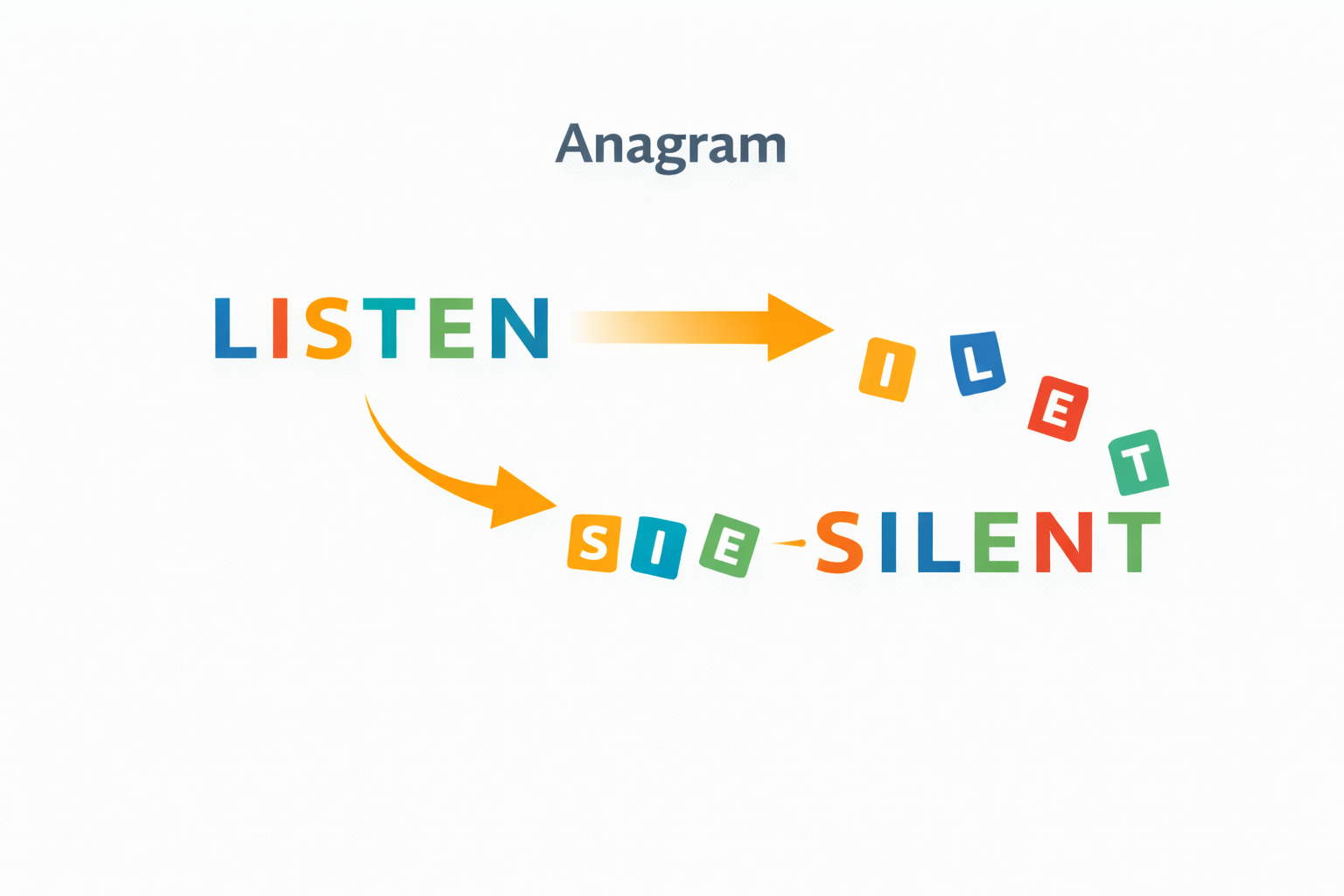
This small shift often produces surprising results. For example, the word “listen” can become “silent.” The letters stay the same, but the meaning changes completely.
People have enjoyed anagrams for centuries. Writers use them creatively, puzzle lovers solve them for fun, and teachers use them to help students understand language patterns. Today, digital tools like an anagram text generator make the process faster and easier.
In this guide, you will learn what anagrams are, how they work, where they appear, and why they still matter in modern word games and learning.
What Is an Anagram?
An anagram is a word or phrase formed by rearranging the letters of another word or phrase while using every letter exactly once.
The rule is simple:
- Use the same letters
- Do not add letters
- Do not remove letters
- Only rearrange them
For example:
- Listen → Silent
- Dormitory → Dirty Room
- School master → The classroom
Each example contains the same letters as the original phrase. The order simply changes.
The word “anagram” itself comes from Greek roots. The prefix “ana” means “again,” and “gram” means “letters” or “writing.” In simple terms, it means rearranging letters again.
According to linguistic references such as the Oxford English Dictionary, anagrams belong to a category of wordplay that relies on letter manipulation rather than sound or meaning changes.
This clever rearrangement makes anagrams both logical and creative.
How Anagrams Work
Anagrams work through permutation, which means changing the order of elements in a set. In this case, the elements are letters.
When you rearrange letters, you create many possible combinations. Some combinations form real words, while others do not.
Take the letters:
L I S T E N
Possible rearrangements include:
- Silent
- Tinsel
- Enlist
- Inlets
- Listen
Every option uses the same six letters.
However, the number of possible arrangements grows quickly as the number of letters increases. A word with six letters has 720 possible permutations (6 factorial in mathematics).
Because of this, finding valid words manually becomes difficult for longer phrases.
That is why many people use an anagram text generator or word solver to explore possible combinations quickly.
Famous Examples of Anagrams
Some anagrams appear so clever that they feel almost magical.
Here are a few famous examples.
Listen → Silent
This is one of the most popular examples. It shows how a slight rearrangement creates a completely different meaning.
Astronomer → Moon starer
This example often surprises people because the new phrase relates closely to the original meaning.
Dormitory → Dirty room
The letters rearrange into a phrase that humorously describes the original place.
School master → The classroom
This classic example demonstrates how anagrams can produce meaningful phrases rather than random words.
Tom Marvolo Riddle → I am Lord Voldemort
This famous literary example appears in the Harry Potter series by J. K. Rowling. The character rearranges his name to reveal his secret identity.
These examples show how anagrams mix logic with creativity.
The History of Anagrams
Anagrams have existed for thousands of years.
Ancient cultures enjoyed rearranging letters as a form of intellectual play. Greek scholars studied word transformations, and Roman writers sometimes used anagrams for satire or hidden meanings.
During the Middle Ages, people believed anagrams could reveal mystical or symbolic messages hidden inside names.
By the Renaissance period, scholars used anagrams in literature, puzzles, and word games.
Modern puzzle culture continued the tradition. Crossword puzzles, Scrabble, and other word games frequently rely on anagram thinking.
According to linguistic historians, anagrams became especially popular in European literature during the 16th and 17th centuries.
Today, they remain popular because they challenge both vocabulary and pattern recognition.
Why People Love Anagrams
Anagrams appeal to both logic and creativity.
First, they challenge the brain. When people solve anagrams, they analyze patterns and recognize letter combinations. This mental process strengthens cognitive flexibility.
Research from the American Psychological Association suggests that word puzzles improve memory, attention, and problem-solving skills.
Second, anagrams introduce playful surprises. A familiar word suddenly transforms into something unexpected.
Third, they help expand vocabulary. When people explore different letter combinations, they often discover new words.
For students and language learners, anagrams offer an enjoyable way to practice spelling and word structure.
Anagrams in Word Games
Word games often depend on anagram skills.
Games such as Scrabble, Words With Friends, and crossword puzzles require players to rearrange letters quickly.
In Scrabble, players receive random tiles. They must arrange those letters to create valid words and score points.
Strong players often look at letters as flexible building blocks rather than fixed sequences. This mindset mirrors the logic behind anagrams.
For example, if a player sees the letters:
A T E R
They might form:
- Rate
- Tear
- Tare
- Ear
- Eat
Recognizing multiple possibilities helps players find the highest scoring move.
Many experienced players use an anagram text generator during practice to improve their pattern recognition.
This approach helps them learn new words and strengthen game strategy.
Educational Benefits of Anagrams
Teachers often use anagrams as educational tools.
They help students understand:
- spelling patterns
- vocabulary structure
- letter frequency
- word formation
Because students must rearrange letters mentally, they practice flexible thinking.
Anagrams also encourage curiosity. When students discover that a word hides another word inside it, they often want to explore more examples.
Language teachers sometimes introduce anagrams during vocabulary lessons or creative writing exercises.
In fact, some educational psychologists recommend word puzzles as tools for improving literacy skills and critical thinking.
Using an Anagram Text Generator
Solving complex anagrams manually can take time. Modern tools simplify the process.
An anagram text generator automatically rearranges letters and checks combinations against large dictionaries.
The process usually follows these steps:
- Enter a word or phrase.
- The generator creates possible letter permutations.
- The system compares those permutations with a dictionary database.
- Valid words appear in the results list.
These tools help users explore many possible combinations quickly.
They also help players practice word games, solve puzzles, or generate creative names.
For example, writers sometimes use anagram generators to invent fictional names or hidden meanings in stories.
Creative Uses of Anagrams
Anagrams do more than entertain puzzle lovers.
Writers often use them creatively.
Authors sometimes hide clues inside character names. Readers later discover that the letters form a meaningful phrase.
Brand creators occasionally explore anagrams when brainstorming names. Rearranging letters can reveal interesting combinations.
Anagrams also appear in puzzles, riddles, and escape room challenges.
In creative writing workshops, instructors sometimes ask students to create anagrams of their own names. The results often inspire imaginative characters or story ideas.
Tips for Solving Anagrams Faster
Solving anagrams becomes easier with practice.
Here are a few helpful strategies.
Look for Common Prefixes and Suffixes
Many English words contain patterns such as:
- re
- un
- dis
- ing
- ed
Recognizing these patterns helps narrow down possibilities.
Rearrange Vowels First
Vowels often determine the structure of a word. Try placing vowels in different positions to see how the word might form.
Break Long Words Into Parts
If a phrase feels overwhelming, split it into smaller segments and solve them separately.
Use Word Lists
Scrabble dictionaries or vocabulary lists help identify valid words quickly.
Practice with Tools
Many learners improve faster by practicing with an online anagram text generator and studying the results.
Over time, pattern recognition becomes automatic.
Final Thoughts
Anagrams show that language contains hidden patterns waiting to be discovered.
By simply rearranging letters, a familiar word can transform into something entirely new. This simple concept connects logic, creativity, and curiosity.
For centuries, people have used anagrams in literature, puzzles, and word games. Today, digital tools make exploring them easier than ever.
Whether you enjoy word puzzles, play Scrabble competitively, or simply want to improve vocabulary, anagrams offer an engaging mental challenge.
Sometimes the most interesting discoveries in language come from a simple idea: rearranging the letters you already have.