
Wordplay has fascinated people for centuries. Among the many forms of linguistic puzzles, anagrams stand out as one of the most creative. They challenge the brain, improve vocabulary, and reveal surprising connections between words.
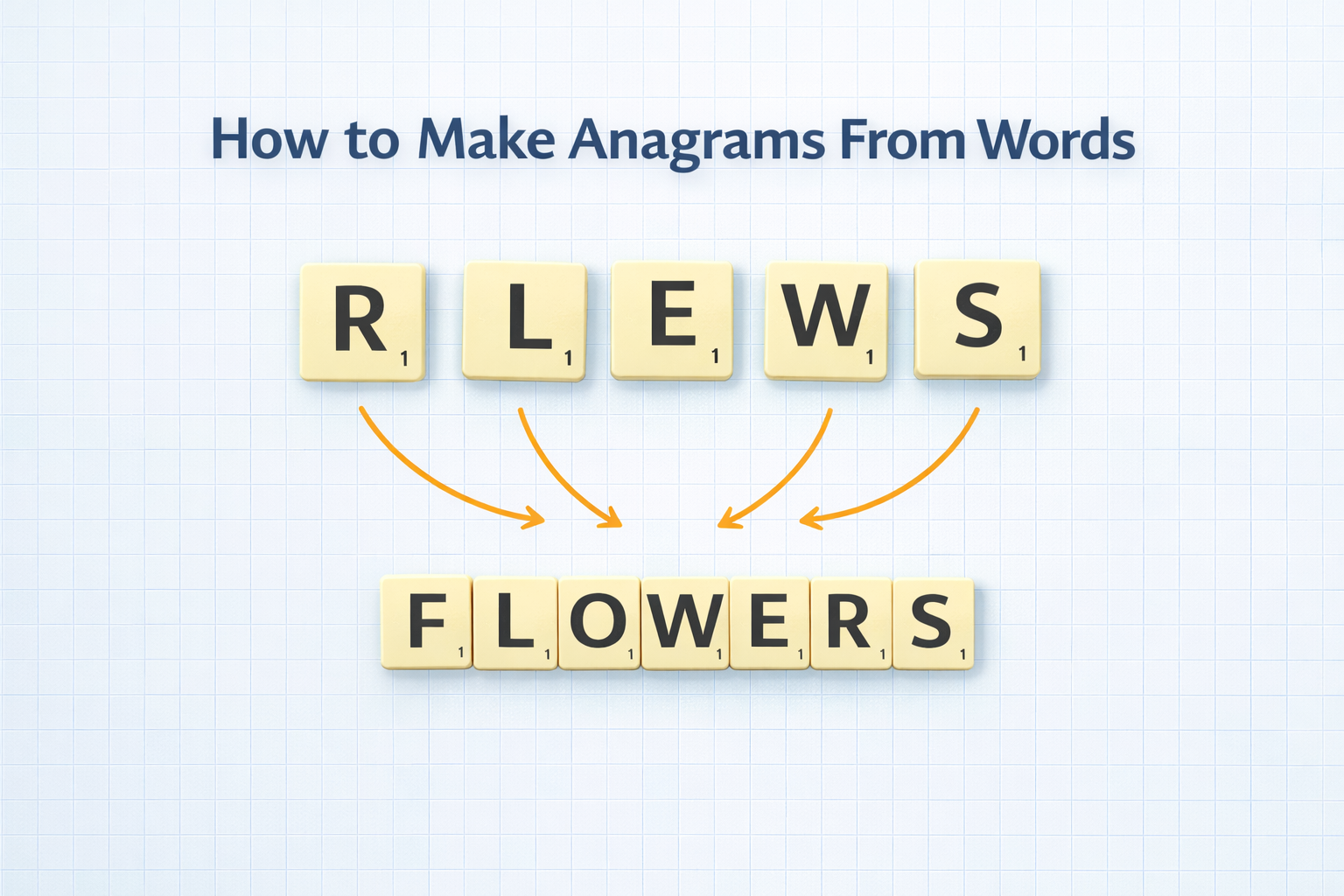
An anagram forms when someone rearranges the letters of a word or phrase to create a new word or phrase without adding or removing letters. At first glance, this process looks simple. In practice, it requires pattern recognition, logic, and sometimes a bit of patience.
You can solve anagrams manually, but many people now use tools such as an anagram text generator to speed up the process. These tools help uncover word combinations that might remain hidden otherwise.
In this guide, you will learn how to make anagrams from words step by step, explore real examples, and understand how anagram tools work.
What Is an Anagram?
An anagram is a word or phrase formed by rearranging the letters of another word or phrase. The key rule remains simple: every original letter must appear in the new arrangement exactly once.
For example:
- Listen → Silent
- Dormitory → Dirty Room
- School Master → The Classroom
These examples show how the same letters can produce completely different meanings.
Historically, anagrams appeared in literature, puzzles, and even political commentary. Writers often used them to hide meanings or reveal secret identities. A famous modern example appears in the Harry Potter series where Tom Marvolo Riddle becomes “I Am Lord Voldemort.”
Because anagrams rely on letter patterns, they also play an important role in word games like Scrabble, crossword puzzles, and word scramble challenges.
Why People Enjoy Anagrams
People enjoy anagrams for several reasons. They mix logic with creativity and offer a satisfying mental challenge.
Here are a few benefits:
1. Brain Exercise
Solving anagrams forces the brain to recognize patterns and reorganize information. Cognitive researchers often link puzzles and word games with improved mental flexibility and problem-solving skills.
2. Vocabulary Improvement
Anagrams expose players to new words. Many puzzle solvers discover unfamiliar terms while searching for valid letter combinations.
3. Entertainment
Word games remain one of the most popular forms of casual entertainment. According to studies discussed by the American Psychological Association, puzzle solving can increase engagement and cognitive stimulation.
4. Strategy in Word Games
Players in games like Scrabble often rearrange their tiles mentally to discover high-scoring words. Anagram thinking plays a major role in winning those games.
Step-by-Step: How to Make Anagrams From Words
Creating anagrams manually becomes easier when you follow a structured process.
Step 1: Write the Original Word Clearly
Start with a clear word or phrase.
Example:
teacher
Write the letters separately:
T – E – A – C – H – E – R
Seeing the letters individually makes it easier to reorganize them.
Step 2: Look for Common Letter Patterns
Certain letter combinations appear frequently in English. These include:
- ER
- RE
- CH
- TH
- ING
Spotting these patterns helps you identify possible word structures.
From teacher, you might notice cheat or reach.
Step 3: Identify Small Words First
Breaking the letters into smaller words often reveals hidden possibilities.
Example:
master
Possible parts:
- arm
- art
- star
- stream
Working from small segments often leads to longer solutions.
Step 4: Rearrange Letters Multiple Times
Anagrams rarely appear immediately. Try several arrangements.
For example:
conversation
Rearranged becomes:
voices rant on
This technique requires experimentation and patience.
Step 5: Check Meaning and Validity
Some letter combinations may look correct but fail as real words.
Always confirm the word exists in a dictionary. Official Scrabble dictionaries or linguistic databases often help verify results.
Reliable references include:
- Merriam-Webster Dictionary
- Oxford English Dictionary
- Collins Scrabble Word List
Using an Anagram Text Generator
Manual anagram solving works well for short words. However, longer phrases can produce thousands of permutations.
This is where a anagram text generator becomes useful.
These tools automate the process by generating all possible letter combinations and checking them against large dictionaries.
How the Tool Works
Most anagram generators follow a similar process:
- The user enters letters or words.
- The system creates possible permutations.
- It compares them with a word database.
- Valid words appear as results.
This process happens in seconds. Without automation, it could take hours.
Many puzzle players use these tools for practice rather than cheating. They help learners understand word patterns and improve vocabulary.
Tips to Solve Anagrams Faster
Even if you use a tool occasionally, improving manual skills can make the process more enjoyable.
Here are practical tips:
Recognize Prefixes and Suffixes
Common prefixes include:
- un
- re
- dis
- pre
Common suffixes include:
- ing
- ed
- er
- tion
Spotting these structures helps you build new words quickly.
Sort Letters Alphabetically
Sorting letters reveals patterns.
Example:
teacher → aceehrt
This makes repeated letters easier to notice.
Use Vowels as Anchors
English words usually contain vowels.
Start by placing vowels first and then fill the surrounding consonants.
Practice with Word Games
Games like:
- Scrabble
- Words With Friends
- Crossword puzzles
force players to think in anagram patterns regularly.
Over time, this improves recognition speed.
Famous Anagram Examples
Anagrams often appear in literature and popular culture.
Here are a few well-known examples.
| Original Word | Anagram |
|---|---|
| Listen | Silent |
| Astronomer | Moon Starer |
| Dormitory | Dirty Room |
| Conversation | Voices Rant On |
| School Master | The Classroom |
These examples show how rearranging letters can reveal surprising meanings.
Common Mistakes When Creating Anagrams
Many beginners struggle with the same problems.
Ignoring Letter Frequency
If a word contains two letters, both must appear in the final anagram.
Example:
letter
Any anagram must contain two “t” letters.
Creating Non-Dictionary Words
Some combinations may look correct but fail dictionary validation.
Always verify the word.
Overlooking Simple Words
Sometimes the best anagram appears in a simple structure.
Example:
stone → notes
Simple solutions often hide in plain sight.
How Anagrams Help With Learning
Anagrams serve more than entertainment purposes. Teachers and language experts use them in classrooms to support learning.
Vocabulary Development
Rearranging letters helps students explore word formation.
Language Awareness
Students learn how letters combine to create meaning.
Critical Thinking
Puzzle solving strengthens analytical thinking.
According to research discussed in language education journals, word puzzles improve engagement and help students retain vocabulary more effectively.
Anagrams in Modern Word Games
Modern digital word games rely heavily on anagram logic.
Games like:
- Wordscapes
- Word Cookies
- Word Connect
ask players to rearrange letters to form multiple words.
Many players improve their skills by practicing with an anagram text generator outside the game. This helps them recognize letter combinations faster during gameplay.
Final Thoughts
Learning how to make anagrams from words unlocks a fascinating world of language puzzles. By rearranging letters, you can discover hidden meanings, improve vocabulary, and sharpen your problem-solving skills.
The process begins with simple steps: write the letters, identify patterns, and experiment with combinations. Over time, practice makes the process faster and more intuitive.
Tools such as an anagram text generator can also help when dealing with complex phrases or long letter sets. They reveal possibilities that manual searching might miss.
Whether you enjoy word games, language learning, or creative puzzles, anagrams offer a fun and rewarding challenge. The next time you see a word, try rearranging its letters. You might uncover something surprising.
Frequently Asked Questions
What is an anagram?
An anagram is a word or phrase formed by rearranging the letters of another word or phrase while using all the original letters exactly once.
How do you make an anagram from a word?
Write the letters of the word, rearrange them into different combinations, and check if the new arrangement forms a valid word in a dictionary.
What tools can help create anagrams?
Online tools such as an anagram text generator automatically rearrange letters and show valid word combinations.
Why are anagrams used in word games?
Anagrams help players discover hidden word combinations, which improves strategy in games like Scrabble and crossword puzzles.